
A city is a system of many systems.
Traditional planning often treats housing, zoning, transit, economic development and finance, as separate silos. We are building a complex systems model that treats each system as deeply interconnected, where each change ripples through the whole.
 Housing
 Zoning & land use
 Economic development
 Transit & mobility
 Capital & finance
This approach has real, measurable impact: ensuring developers and construction capital are motivated to invest in new housing types is what gets that housing built on time. Modeling residents' mobility patterns similarly clarifies real parking, transit, bike, and foot-traffic needs.
A public good for San Francisco.
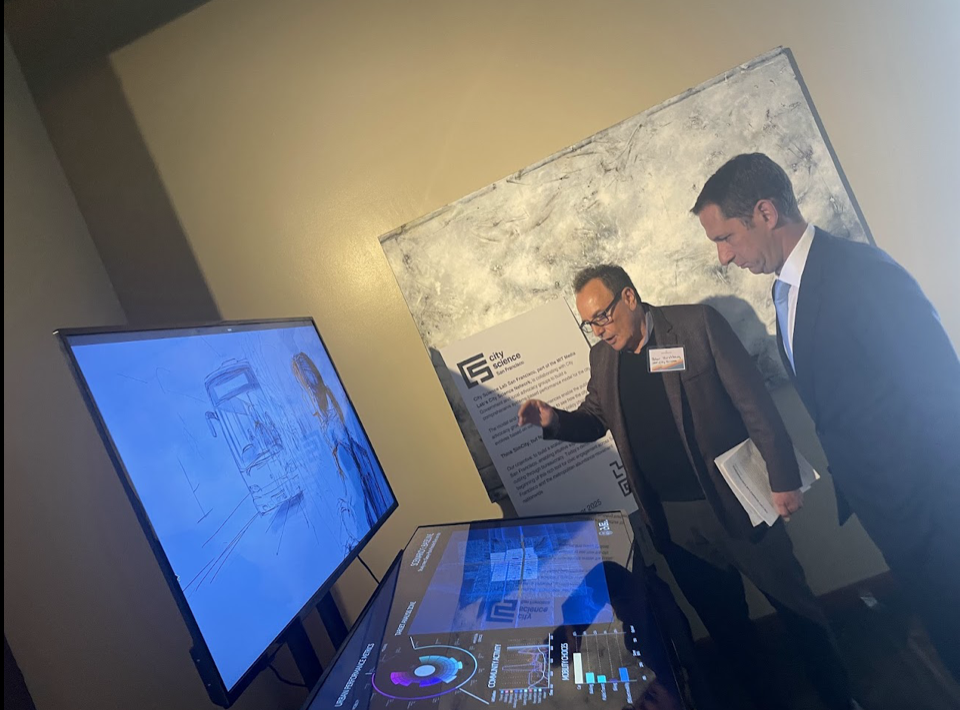
City Science SF co-founder Peter Hirshberg demos an early version of the MIT City Science model to SF Mayor Daniel Lurie.
City Science San Francisco is an independent nonprofit that works across sectors to strengthen the city's capacity to anticipate change, respond to complex challenges, and turn promising ideas into action.
We work hand in hand with government departments, advocacy organizations, academic researchers and industry partners to extend their capacity, broaden their foresight, and help them explore solutions beyond day-to-day operations.
San Francisco provides a uniquely dynamic environment and talented citizenry in which to apply, test, and advance new civic ideas. MIT pioneered the modeling and visualization methods behind our work, and has built an international network of City Science Labs over the past decade. City Science San Francisco plans to join that network in the months ahead. We are actively working to secure the needed funding to establish a formal agreement with MIT to be able to continue this impactful work.
Visit MIT City Science →Addressing the housing polycrisis in San Francisco.
Our complex systems modeling allows us to map the full web of interdependencies across the housing system. Policymakers can test whether a zoning change delivers the units it promises; developers can see which parcels pencil out; residents can see how a project reshapes their block.
Watch our talk at SPUR →Review the talk summary →
Our focus: turning recent and proposed housing legislation into real housing supply. Family Zoning passed in 2025, but new construction still hasn't followed because the economics don't pencil out. Systems modeling enables us to identify unrealized land opportunities through new technology, approaches, and regulatory reform. We're fund-raising to fully develop these paths towards more housing and to work with the real estate community. Through partnerships, we aim to launch pilot builds and develop programs that can be deployed at scale throughout the city, region, state, and beyond.
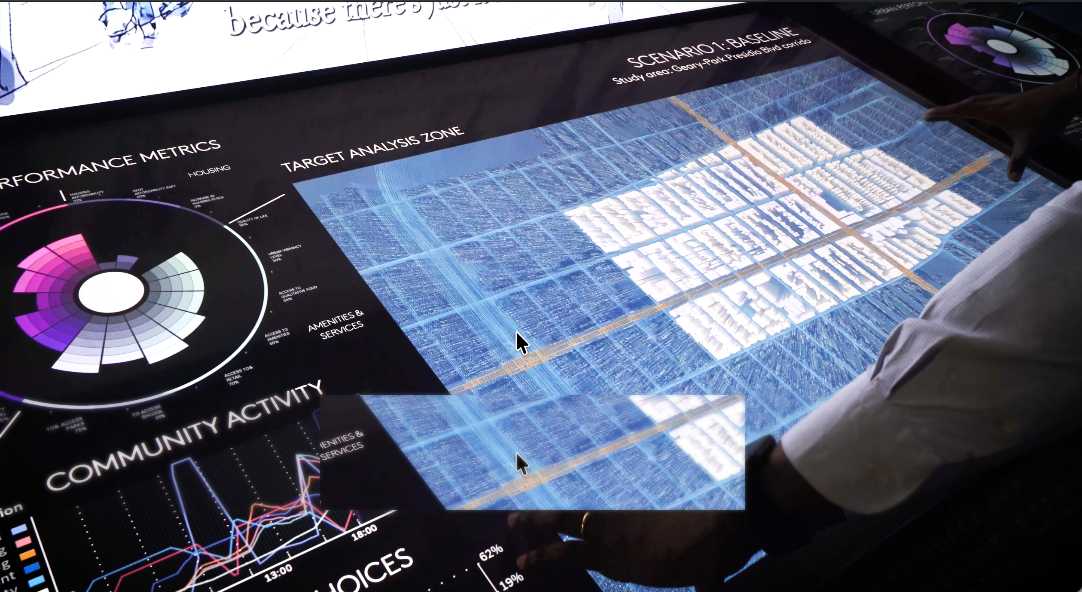
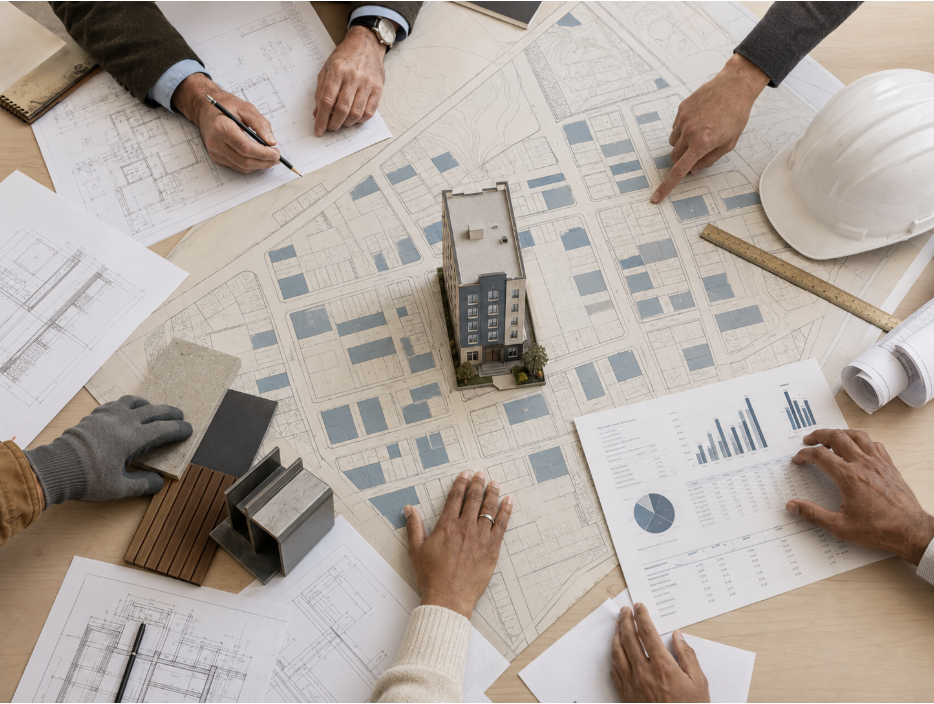
An early version of the MIT City Science model, mapping housing, zoning, financing, and construction.
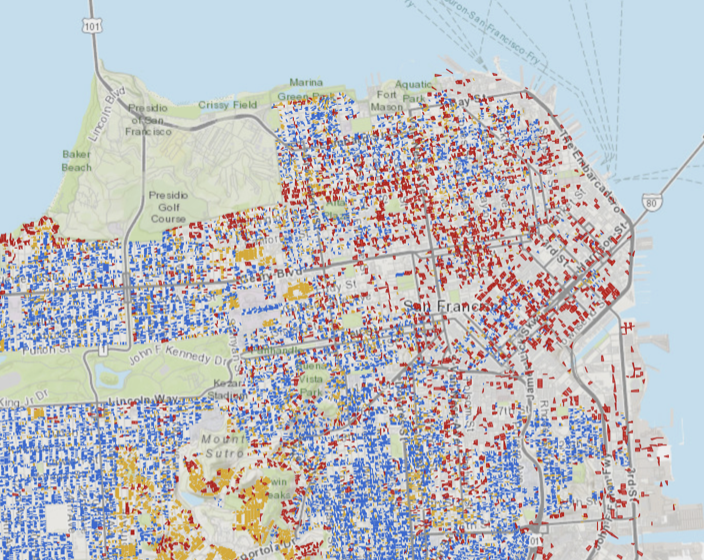
Identify which parcels are feasible for development under which scenarios.
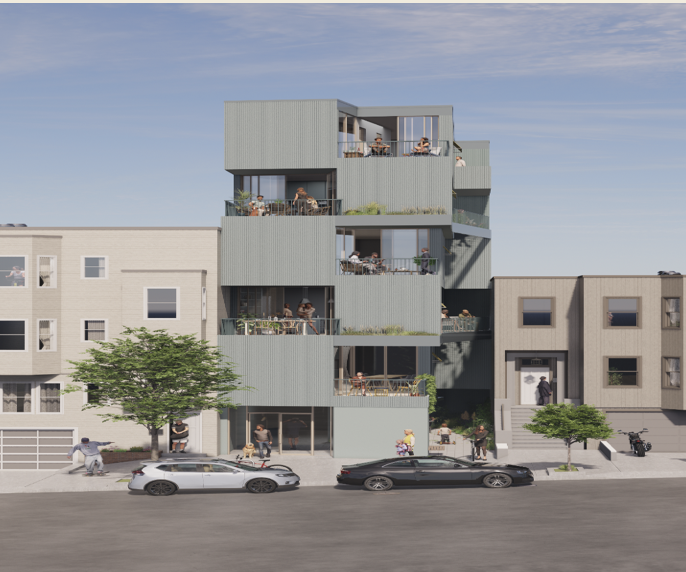
Partner to build the pilots that prove the model in practice.
Extend what works into policy and programs across the city, state, and nation.
Visualizing Family Zoning.
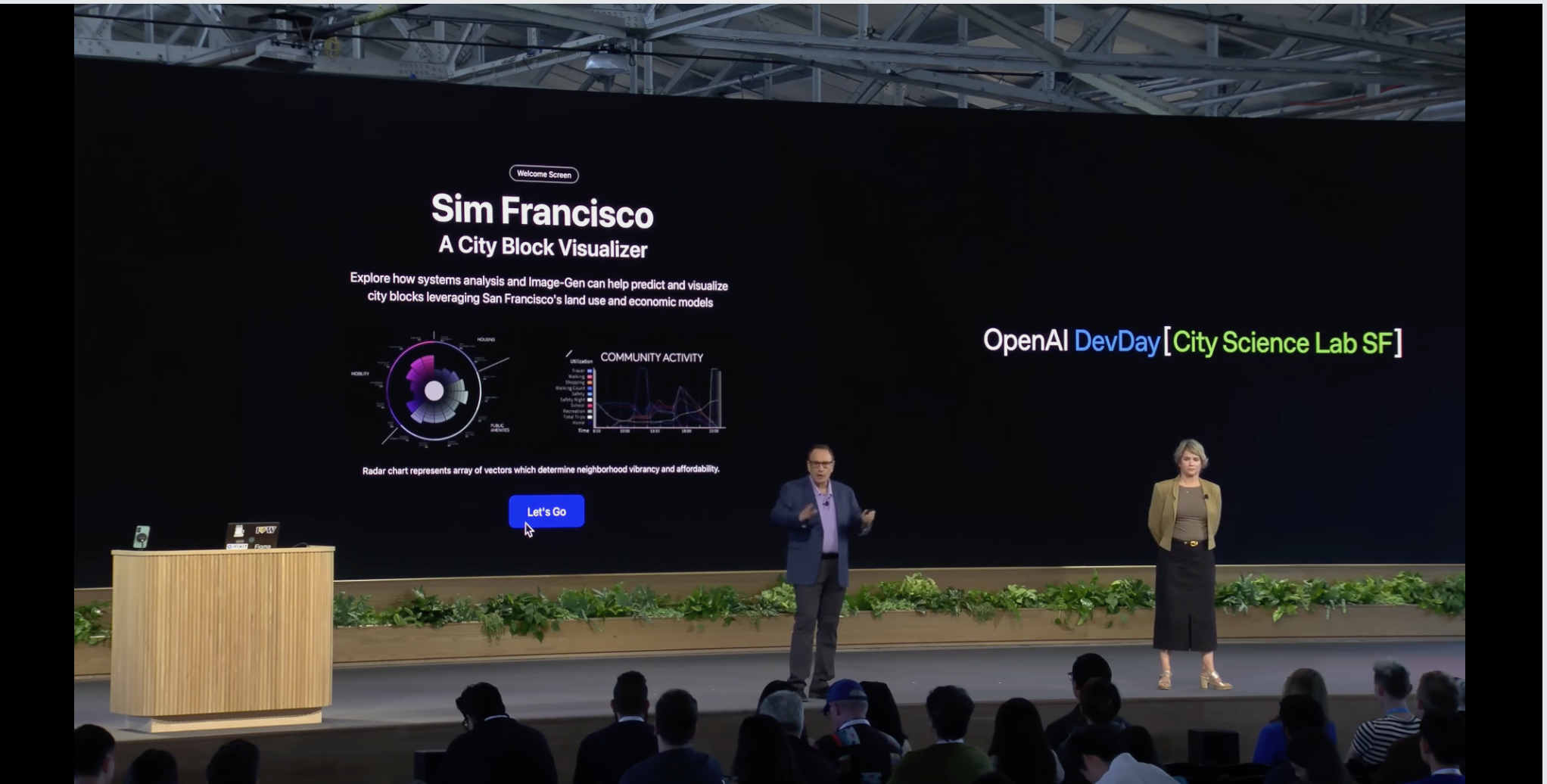
A data-driven engine that lets residents see how their own block would likely develop under new Family Zoning rules — and whether that change is economically feasible. Demonstrated on stage at OpenAI DevDay.
Throughout 2025 the City Science Lab SF partnered with SPUR, SF Planning, the Office of Economic and Workforce Development, and community groups to visualize how proposed zoning changes could affect neighborhoods.
Together we explored which policy combinations — from zoning and building codes to financing and construction methods — can deliver the optimal mix of affordable and market-rate housing, faster.
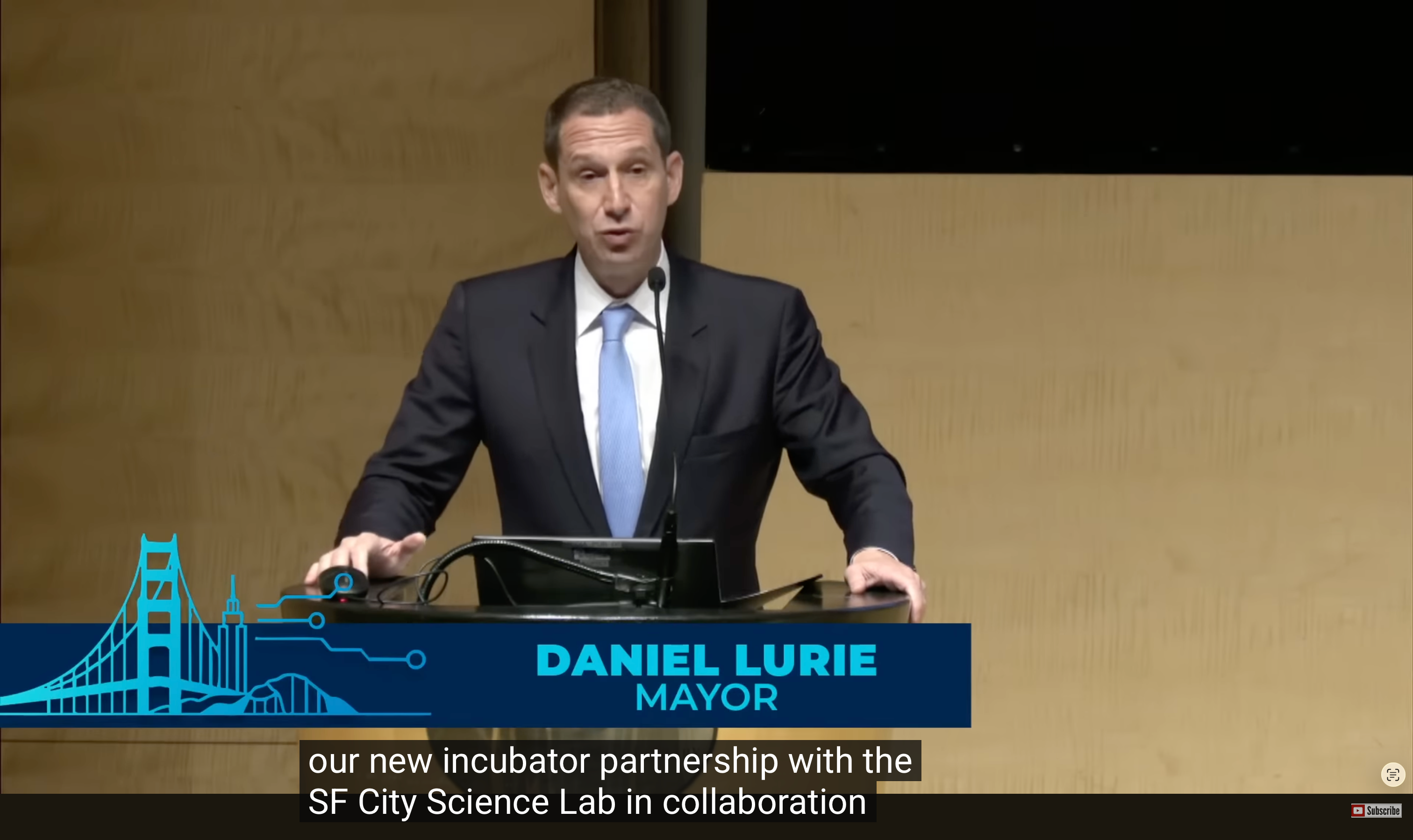
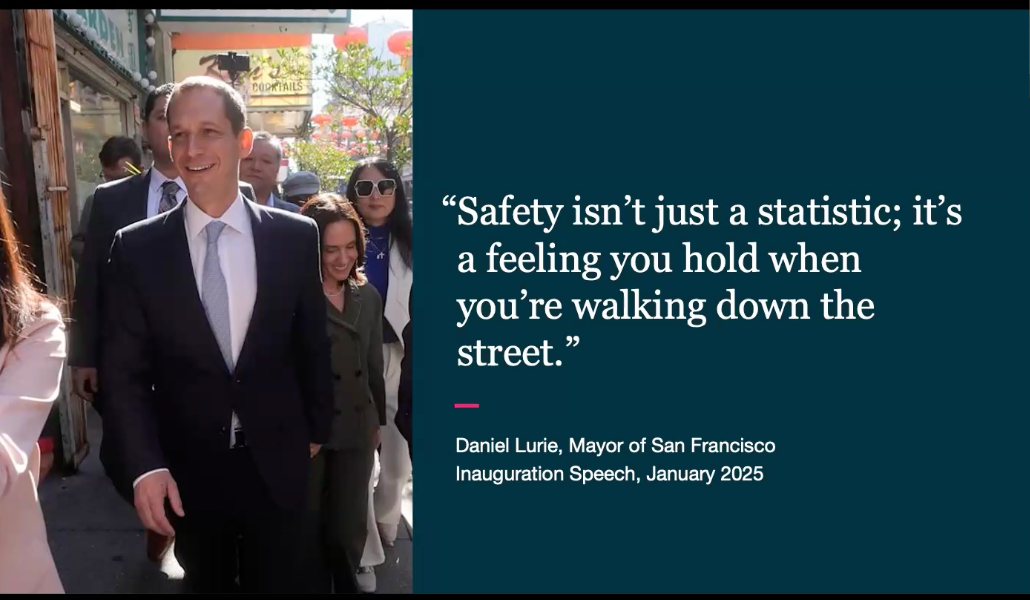
SF AI Day with the Mayor.
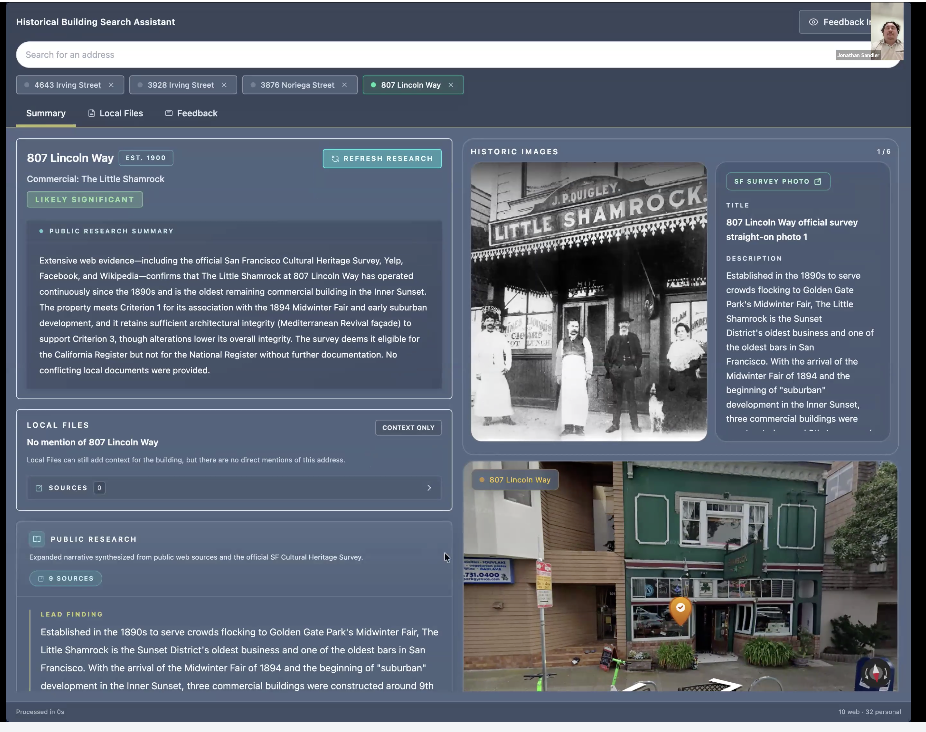
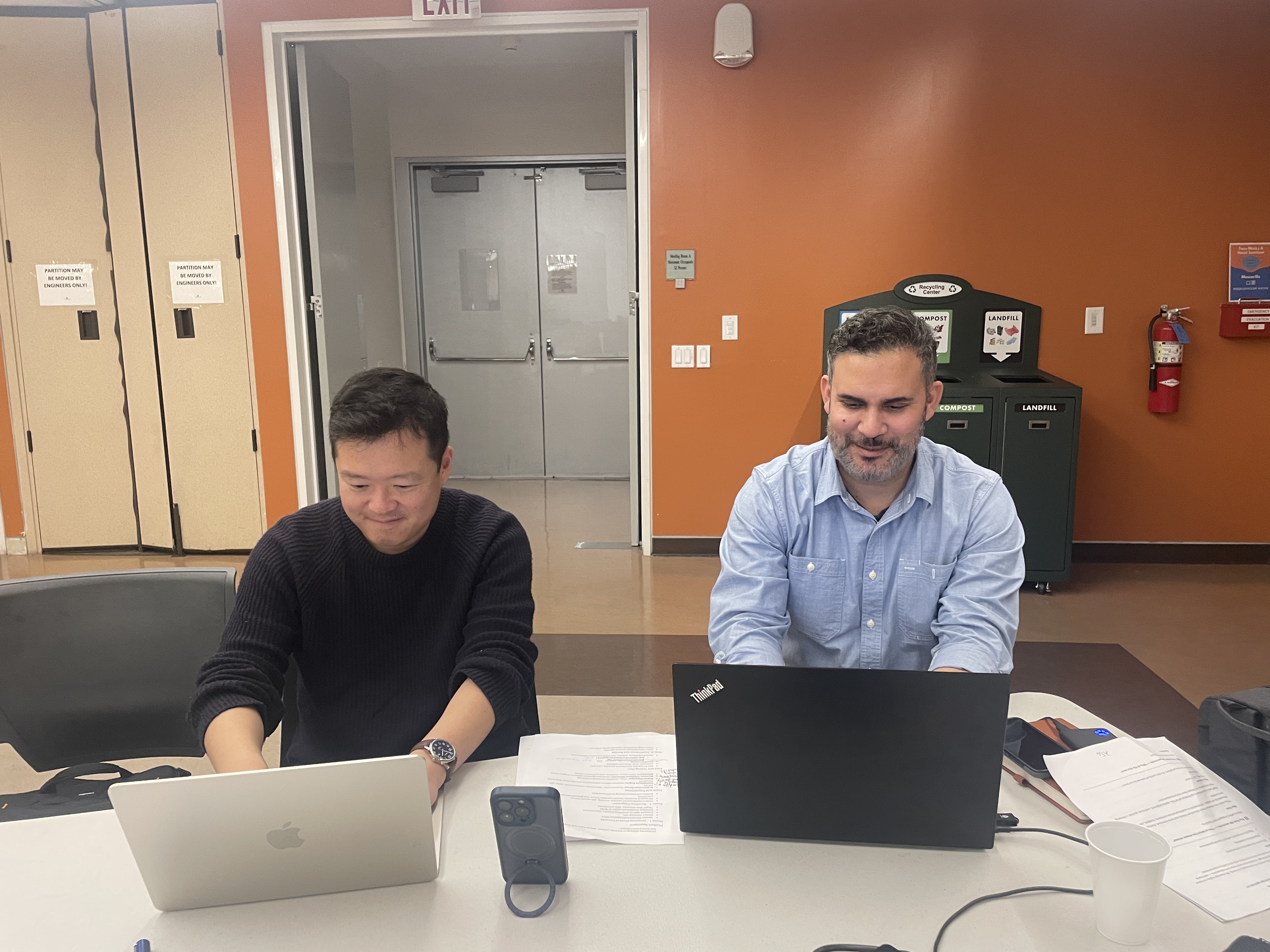
Traditional civic hackathons often produce solutions that are disconnected from actual city operations and don't sustain themselves beyond Sunday night. The City AI Challenge tested a different model: city department staff identified operational challenges from their daily work, then collaborated with volunteer mentors matched from SF's rich technologist community. Each team collaborated in a short sprint to define the opportunity, identify technical approaches and scope a pilot to prove traction.
Collaborate with us.
We're channeling the city's world-class talent toward its most pressing challenges. Funders, partners, and volunteers all have a place in the work.
Contact usFrontier Tower
995 Market St, 9th Floor Annex
San Francisco, CA 94103